Hydrojetting in Wisconsin: A Complete Guide to Clearing Sewer Blockages
Key Takeaways
- Hydrojetting uses high-pressure water to thoroughly clean sewer pipes.
- Best for removing roots, grease, scale, and recurring sewer clogs.
- A video inspection should be done before jetting to confirm the pipe condition.
- Not recommended for cracked, collapsed, or severely deteriorated pipes.
- Typical cost in Wisconsin ranges from $600-$1500 depending on pipe size, severity, and access.
What Is Hydrojetting?
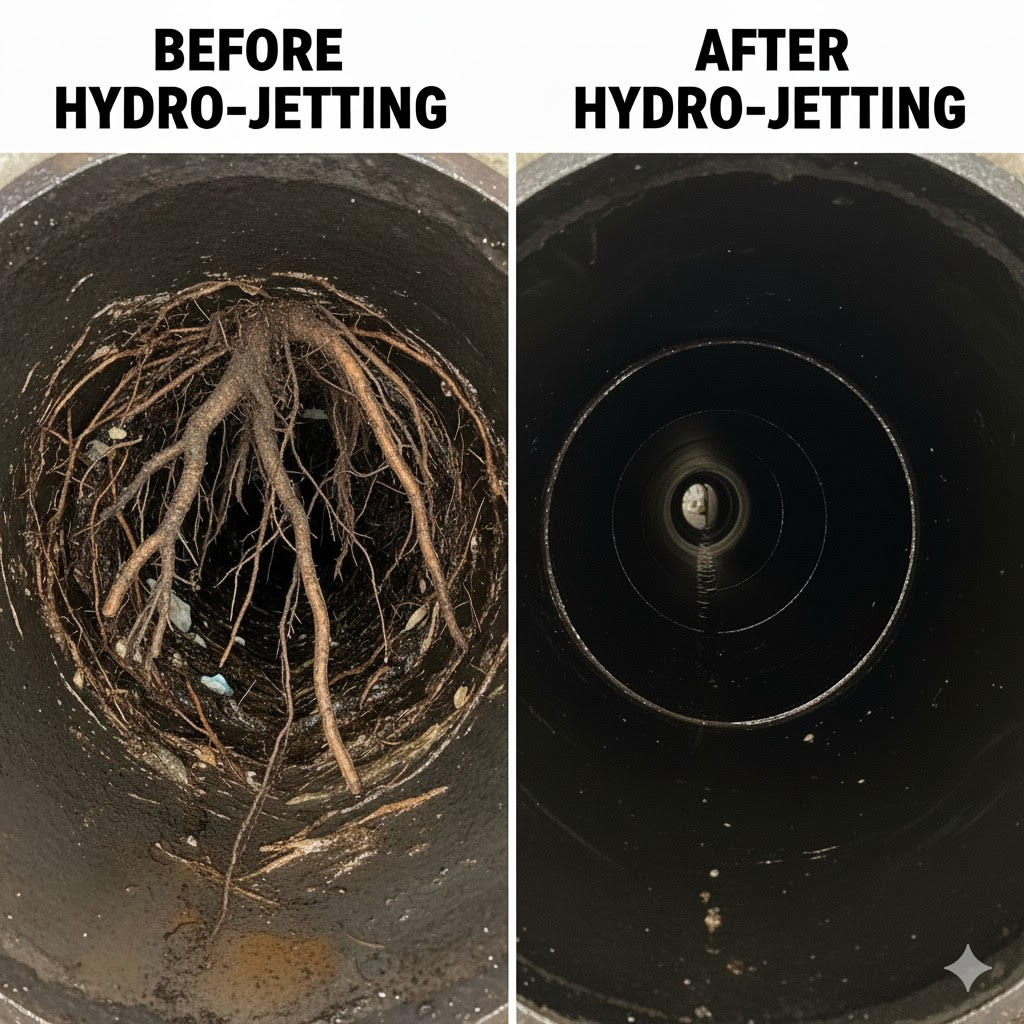
Hydrojetting is a professional sewer cleaning method that uses high-pressure water to remove buildup, obstructions, and debris inside a sewer line. Pressurized water is delivered through a hose and specialized nozzle to clean the full interior diameter of the pipe. Unlike snaking, which only clears a path through a clog, hydrojetting washes away accumulated material for a more complete clean.
How Does Hydrojetting Work?
Hydrojetting works by pushing water at high pressure (often 1,500 to 4,000 PSI) through a flexible hose placed into a sewer line. A nozzle at the end of the hose directs the water in multiple directions to break up and flush away debris.
Typical Steps in a Hydrojetting Service
- Video inspection to evaluate the pipe and confirm there are no structural failures.
- Placement of the jetting hose into the sewer cleanout or access point.
- Controlled jetting using the appropriate pressure and nozzle for the blockage type.
- Flushing debris out of the pipe toward the main sewer.
- Post-jetting inspection to confirm the entire line is clean and flowing properly.
What Causes Sewer Blockages in Wisconsin Homes?
Several environmental and household factors make sewer blockages common throughout Wisconsin. Cold winters, older housing stock, and mature tree growth contribute to sewer line issues in many neighborhoods.
Common Sources of Sewer Line Clogs
- Tree root intrusion: Roots seek moisture, often entering small cracks in older clay or cast-iron pipes.
- Grease and fat buildup: Cooking oils solidify and coat pipe walls, trapping food scraps and debris.
- Scale and mineral deposits: Hard water can cause mineral buildup, narrowing pipe diameter over time.
- Non-flushable items: Wipes, paper towels, and hygiene products can lead to blockages.
- Aging or damaged pipes: Older pipes may crack, shift, or collapse, restricting flow.
How Common Are Sewer Blockages in Wisconsin?
Sewer blockages are common in Wisconsin, particularly in cities with older housing stock such as Milwaukee, Madison, Kenosha, Racine, Waukesha, and many smaller communities. Numerous homes built between the 1940s and 1970s still rely on original sewer lines made of clay or cast iron, which are more prone to root intrusion and deterioration.
Seasonal temperature changes and freeze-thaw cycles can also contribute to ground movement and pipe shifting, increasing the likelihood of sewer issues.
What Are the Signs a Home May Need Hydrojetting?
Homeowners often notice early warning signs before a sewer backup occurs. Hydrojetting is most effective when used at the first signs of recurring blockage or reduced flow.
Common Indicators
- Slow-draining sinks, tubs, or showers
- Gurgling or bubbling toilet noises
- Sewage odors near drains or in the basement
- Water backing up at the lowest drain in the home
- Recurring blockages after snaking or chemical drain treatments
Hydrojetting vs. Snaking vs. Other Cleaning Methods
Different sewer cleaning methods vary in effectiveness depending on the cause of the blockage. The comparison below outlines key differences.
Comparison of Sewer Cleaning Methods
| Method | How It Works | Best Use | Limitations |
|---|---|---|---|
| Snaking (Rodding) | Breaks through a clog with a cable | Quick clogs from debris or paper | Does not clean pipe walls; clogs often return |
| Hydrojetting | High-pressure water cleans entire pipe | Roots, grease, scale, sludge, recurring clogs | Not suited for cracked/collapsed pipes |
| Chemical Cleaners | Dissolves some organic material | Minor buildup | Often ineffective; may damage pipes |
| Descaling | Uses abrasive chain tools to remove scale | Cast iron scale buildup | May require follow-up jetting |
| Pipe Lining (CIPP) | Installs a new pipe inside the old one | Long-term solution for damaged pipes | Higher cost; requires inspection to qualify |
Hydrojetting provides a deeper clean because it removes buildup along the entire pipe, not just the immediate clog.
When Should Hydrojetting Not Be Used?
Hydrojetting is not suitable for every situation. A video inspection should always be completed first to determine whether the pipe is in good enough condition to handle high-pressure water.
Avoid Hydrojetting If:
- The pipe is cracked, collapsed, or structurally compromised
- There is no accessible cleanout or safe access point
- The home has fragile or extremely outdated piping at risk of failure
- A professional inspection advises alternative solutions
If severe deterioration is found, repair options such as pipe lining or pipe replacement should be considered instead of jetting.
Is Hydrojetting Safe for Older Wisconsin Homes?
Hydrojetting is generally safe for older Wisconsin homes if the pipe structure is intact. Many older homes with cast-iron or clay pipes benefit from jetting because it removes decades of buildup and roots. Pressure should always be adjusted to match pipe type and condition.
A certified technician will assess the condition of the pipe through inspection and choose an appropriate pressure level to avoid damage.
How Much Does Hydrojetting Cost in Wisconsin?
The cost of hydrojetting in Wisconsin typically ranges from $600-$1500 for a standard residential sewer line. Pricing can vary based on several factors.
Factors That Affect Cost
- Severity and location of the blockage
- Pipe diameter and length
- Ease of access to a sewer cleanout
- Need for multiple passes or descaling beforehand
- Additional inspection or follow-up services
Large, heavily blocked, or root-filled lines may cost more, while preventative jetting or light buildup may fall at the lower end of the range.
Is Hydrojetting a Permanent Fix?
Hydrojetting provides a thorough cleaning but is not a permanent solution for damaged pipes or ongoing root intrusion. While jetting removes roots and buildup, roots can grow back over time if pipe entry points are not sealed. Homeowners may need hydro jetting every 1–3 years depending on the age of the sewer line and surrounding tree growth.
Permanent solutions, such as pipe lining or replacement, address the root cause of recurring infiltration or structural failure.
How to Prevent Future Sewer Blockages After Hydrojetting
Preventive maintenance can help extend the benefits of hydrojetting and reduce the likelihood of future sewer issues.
Prevention Tips
- Dispose of grease and cooking oils in the trash—not down the drain.
- Use drain strainers to catch food scraps and hair.
- Flush only toilet paper—avoid wipes, even those labeled “flushable.”
- Consider periodic video inspections for aging sewer lines.
- Address root intrusion early with appropriate long-term solutions.
Frequently Asked Questions
How long does hydrojetting take?
A typical residential hydrojetting appointment takes 1–2 hours, including inspection and cleaning.
Does hydrojetting work on tree roots?
Yes. Hydrojetting can cut through and remove tree roots that have entered the sewer line, though it does not prevent regrowth.
Will hydrojetting damage pipes?
When performed by a trained professional after a proper inspection, hydrojetting is safe. It should not be used on pipes that are cracked, collapsed, or severely deteriorated.
How often should homeowners use hydrojetting?
For homes with recurring buildup or root intrusion, hydrojetting every 1–3 years can help maintain flow and prevent backups.
Can I do hydrojetting myself?
No. Hydrojetting requires specialized equipment and training. Improper use can cause pipe damage or personal injury.
Glossary of Sewer Terms
Cleanout: An access point on a plumbing system that allows professionals to insert equipment for cleaning or inspection.
CIPP (Cured-In-Place Pipe): A trenchless pipe repair method that installs a new pipe within an existing damaged pipe.
Descaling: A process used to remove hard mineral buildup inside pipes, often in older cast-iron systems.
Root Intrusion: Tree roots entering a sewer pipe through small openings, causing blockages or damage.
Scale Buildup: Mineral deposits that accumulate on the inside of pipes and restrict flow.
Sewer Lateral: The pipe that connects a home’s plumbing system to the municipal sewer main.
If you would like a professional sewer inspection to determine whether your line is a good candidate for hydrojetting, you can schedule a visit with Sewer Ninjas.